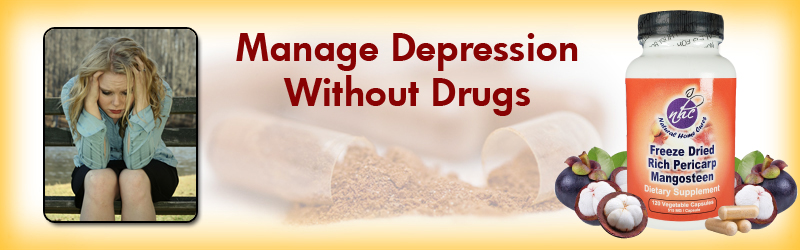
Discover The Secret To Ending Depression With Our Natural Home Cures Freeze Dried Mangosteen Capsules Made From The Rich Pericarp
17-Year Depression Victim and Clinical Psychologist Reveals How Natural Home Cures Freeze Dried Rich Pericarp Mangosteen May Give You The Power To Beat Your Depression, Control Sadness, Eliminate Hopelessness and Reclaim Your Happiness
✔ Dominate Your Depression.
✔ Free Yourself From Your Negative Thoughts And Feelings.
✔ End your Suffering From Depression Forever.

Depression can sneak into your mind and put a hold on your life like no other condition. Depression can make you miserable and rob you of your life - but this might change using our Natural Home Cures Freeze Dried Rich Pericarp Mangosteen. |
Do You Suffer From Any Of These Depression Symptoms?
✔ Tired, have little energy, and struggle to accomplish everything on your “to-do” list?
✔ Anxious and worried about little things in life?
✔ Are Negative thoughts and feelings of suicide entering your mind?
✔ Are You Restless, irritable, and lash out at your loved ones?
✔ Having Difficulty falling or staying asleep?
✔ Having Mental fatigue & find it difficult to study or even think?
✔ Experiencing headaches, backaches, joint pain, and other physical ailments?
✔ Socially withdrawn from your family, friends, and loved ones?
✔ Feel alone and hopeless, and no one understands what depression feels like?
Globally, more than 350 million people suffer from depression, a mental health disorder that can be profoundly debilitating in many areas of one's life. The social stigma attached to depression prevents most from seeking treatment.
 Hello, my name is Linda Evans; I have been battling depression for 17 years. Like you, I had my good moments and downright bad ones too. My life was like a Yo-Yo, to the point I felt helpless. My friends and family did not understand and told me to "snap out of it." Oh, believe me; I would have loved to "snap out of it" if it were only that easy. Good days were few and far between. I knew that at any moment, the sadness, negative feelings, fatigue, body aches, loneliness, irritability, and thoughts of suicide would quickly return. Even when I was given anti-depressants, painful side effects were common. I had tried my fair share of prescription medications, diets, exercises, workshops, seminars, home study programs, and even a wearable depression patch. Almost none of this worked outside of robbing me of my hard-earned money and giving me marginal success. I learned, through my research, that the pharmaceutical companies that were supposed to be finding the cure to depression could only offer prescription medications that masked the symptoms. This is why I began my journey to find natural alternatives for depression. Hence, I have since earned a graduate degree in psychology. I wrote my dissertation on clinical depression and had been researching and studying the topic for more than 25 years. I fervently hope that the information shared here will help you on your journey to understanding and overcoming your depression. |
So What Exactly Is Depression, and What Causes It?
Clinical Depression is a state of low mood and aversion to activity. It is a critical medical condition that usually involves the brain. Sadness is an emotional response to life's challenges and disappointments, but depression goes deeper than that. It is a chronic condition affecting millions in the United States and hinders an individual's ability to work, play, study, eat, and sleep.
There are numerous kinds of depression(1*). Profound sadness and outbursts of anger characterize it, and a loss of passion or enthusiasm for activities once enjoyed. Indeed, self-esteem is eroded. Major depressive disorder and dysthymic disorder also referred to as dysthymia, are the most common forms of depression.
Major depressive disorder can manifest as a single episode or sporadically throughout one's lifetime. Dysthymic disorder is defined by consistently present symptoms, though less severe. Both disorders impact day-to-day functioning.
Depression Symptoms
The severity of the symptoms varies widely with an individual. Generally, a depressed person will experience a number of the following manifestations: continual sadness, fear, anxiety, or feelings of emptiness; the sense of hopelessness and being helpless; loss of interest or pleasure in activities you used to like; appetite or weight changes; insomnia or oversleeping; irritability or restlessness; lethargy; concentration issues, decision-making skills, social isolation, crying spells, suicidal thoughts or committing the act itself(2*), (3*), (4*).
Conventional Depression Treatments (Medical Intervention)
Knowing the root factor for clinical depression could help defeat the problem. The major depressive disorders, specifically those which are chronic, will need Electro Convulsive Therapy (ECT)(5) in conjunction with anti-depressant medicines(6*) and psychotherapy to get the best outcome.
Anti-depressant medications will not eliminate depression; they help the individual feel well by controlling particular symptoms. One of the most frequently used drugs consist of selective tricyclic anti-depressants (TCAs)(7*), monoamine oxidase inhibitors (MAOIs)(8*), and serotonin reuptake inhibitors (SSRIs).(9*)
SSRIs are often the first line of medication for depressive disorders since they provide fewer adverse reactions than TCAs and MAOIs. Unlike monoamine oxidase inhibitors (MAOIs), Serotonin Reuptake Inhibitors or SSRIs will not work together with tyramine in meals and thus do not need the dietary constraints of the MAOIs.
Also, SSRIs do not cause orthostatic hypotension, and cardiac arrhythmias(10*), like tricyclic anti-depressant (TCAs) do(11*). Serotonin Reuptake Inhibitors, or SSRIs, are often accepted adequately by individuals, and even the side effects tend to be moderate. The most typically reported unwanted effects are nausea, agitation, headache, sleeplessness, and diarrhea(12*), (13*).
Regarding ECT, controlled convulsions are produced in the brain by passing a pre-programmed electrical current(14*) Electro. Convulsive Therapy (ECT) is helpful for individuals who can't acquire or haven't reacted positively to antidepressants, have severe depression symptoms, or individuals who pose suicidal attempts. Psychotherapy is utilized to help relieve the pain of depression and tackles the destructive emotions that go along with depression. Psychotherapy includes a variety of methods, including social-behavioral, mental, psychodynamic, and problem-solving treatment.

Mangosteen Xanthones have been studied for their potential to help with depression, as they have been shown to have anti-inflammatory and antioxidant properties.
In a study published in the Journal of Agricultural and Food Chemistry, researchers found that mangosteen xanthones had antidepressant-like effects(15*). The study showed that these compounds increased serotonin and dopamine levels in the brain, neurotransmitters associated with mood regulation.
In another study published in the Journal of Natural Medicines, researchers found that a mixture of mangosteen xanthones had anxiolytic effects(16*). The study showed that these compounds reduced anxiety-like behavior.
Vitamin C has been shown to have a role in regulating mood. In a study published in the American Journal of Clinical Nutrition, researchers found that vitamin C reduced symptoms of depression in elderly patients(17*).
Vitamin B6 is essential for producing neurotransmitters such as serotonin and dopamine that regulate mood. In a study published in the Journal of Psychiatric Research, researchers found that vitamin B6 supplements reduced symptoms of depression in women with premenstrual syndrome(18*).
Potassium is essential for maintaining healthy blood pressure and heart function. In addition, potassium has been shown to have a role in regulating mood. In a study published in the British Journal of Nutrition, researchers found that a high-potassium diet reduced symptoms of depression in rats(19*).
Magnesium is vital for maintaining healthy bones and muscles. In addition, magnesium has been shown to have a role in regulating mood. In a study published in the Journal of the American College of Nutrition, researchers found that magnesium supplements reduced symptoms of depression in patients with type 2 diabetes(20*).
Iron is essential for maintaining healthy blood cells and oxygen transport. In addition, iron has been shown to have a role in regulating mood. In a study published in the Journal of Clinical Psychopharmacology, researchers found that iron supplements reduced symptoms of depression in women with iron-deficiency anemia(21*).
Case Studies
In a case study published in the Journal of Alternative and Complementary Medicine, a 37-year-old woman with a history of depression was given mangosteen for eight weeks(22*). During this time, the patient experienced a reduction in symptoms of depression and an improvement in overall mood and quality of life.
In another case study published in the Journal of Dietary Supplements, a 45-year-old man with a history of depression was given mangosteen for four weeks(23*). The patient experienced a reduction in symptoms of depression, as well as an improvement in overall mood and energy levels.
Thanks to our Natural Home Cures Freeze Dried Rich Pericarp Mangosteen Capsules, you may defeat your depression in as little as 39 days. Imagine how wonderful your life would feel if you no longer suffered from depression:
Have the energy to accomplish your daily tasks with enough energy left over for a night of bliss.
Eliminate the anxious feelings and all the endless worries.
Become more productive and more successful in both your personal and professional life.
Save thousands of dollars on therapy bills and anti-depressants.
Stop the negative thoughts, doubts, and feelings that life isn’t worth living.
Enjoy a good night’s sleep and wake up refreshed and energized.
Stop the headaches, backaches, joint pain, and other physical pains due to depression.
"My Depression Is Gone; All The Negative Sides Effects Are Gone, My Sexual Energy And Stamina Are Way Up!"After suffering from significant migraines, insomnia, nausea, upset stomach, and other side effects from Effexor for two years, I sought an all-natural product without harmful effects. That's when I discovered your Natural Home Cures Freeze Dried Mangosteen Capsules. Within 45 days of trying them, my depression vanished, along with all the negative side effects. My sexual energy and stamina have also increased, and I'm enjoying life like never before. Grant Conrad from Eugene, Oregon |
"I Am Finally Free From Anxiety & I Enjoy Living Again!"To overcome depression, my doctor prescribed antidepressants that helped but brought about side effects such as anxiety, restlessness, and insomnia. Moreover, while my depression was receding, other health issues cropped up. Upon discovering the Natural Home Cures Freeze Dried Mangosteen website, I decided to try their product. After taking it for 45 days, my anxiety, loneliness, stress, and despair have reduced significantly, and I can confidently say that this product saved my life. Stel Geor from Sofia, Bulgaria
|


Natural Home Cures Freeze Dried Rich Pericarp Mangosteen Capsules
What Is Freeze Dried?
At Natural Home Cures, we use the process of freeze drying because it’s the only way to take raw mangosteen and create a stable, nutritionally complete supplement(23*).
Freeze drying refers to taking biological material naturally high in water, freezing it, and extracting the ice from it. Freeze drying is the only process to preserve biological material without destroying the fruits’ or vegetables’ enzymes and nutrients(24*).

Natural Home Cures places the mangosteen in a temperature and pressure-controlled environment. The pressure is significantly lowered so that the ice in the mangosteen "sublimates" and turns from solid to liquid, bypassing the liquid phase. The result is a stable substance with a long shelf life that is lightweight and maintains its nutritional content. To understand how freeze-drying works, we need to explore how the relationship between temperature and pressure affects the states of water(25*).
SEE THE FULL REPORT HERE
(A New Browser Window Will Open)
When we use the term "states of water," we refer to water's solid, liquid, and gas states. For example, water in its solid state is ice, water in its liquid form is water, and water in its gaseous form is steam.
Atmospheric pressure affects how long it takes for a substance to move through the various states of matter. As a rule, low temperatures and high pressures favor a solid state, while high temperatures and low pressures favor a gaseous state. But pressure can be manipulated to create a dramatic effect in phase change called sublimation. This is where water changes phases from a solid directly to a gas: If the pressure is sufficiently low, even in the absence of high heat, ice will sublimate(26*).
Freeze-drying results in a pure supplement with all its nutrients intact. It also creates a lightweight supplement that drastically cuts shipping costs, adding savings. Finally, if you live a busy lifestyle, it’s much more convenient to take a few capsules vs. drink a glass of watered-down, full of preservatives and radiation mangosteen juice.
When choosing a mangosteen supplement, select one that provides all the health benefits you are paying for and one that only Natural Home Cures delivers. Natural Home Cures has been a global health and wellness mangosteen leader for 15 years.
"No More Depression, Or Anxiety, My Life Is Now More Enjoyable!"I discovered your Natural Home Cures Freeze Dried Mangosteen website while struggling with depression for a few years. After taking your product for two weeks, I noticed improved sleep and reduced migraines and anxiety. I could decrease my prescription medication in four weeks while benefiting from your product. Two months later, I am thrilled to say that I am completely free of depression and anxiety, and my quality of life as a mother and wife has dramatically improved. Additionally, my libido has increased significantly, much to my husband's delight. Cathie Morrow from Houston, Texas |
Life Is Too Short To Let Depression Ruin It For You - Why Hesitate?

I know that you have been conditioned to believe that anything that sounds too good to be true probably is, and with the number of scams on the Internet, I don't blame you for not trusting everything that has been written.
That is why Natural Home Cures Freeze Dried Rich Pericarp Mangosteen Capsules are also sold on Amazon. So you can always buy in confidence.
Full Disclosure and Transparency: You will always get a lower price, fresher product & more extended money-back guarantee when you purchase directly from our Natural Home Cures website.
Visit Our Freeze Dried Rich Pericarp Mangosteen Listing
(A New Browser Window Will Open So You Can Return Here When You're Done)
Natural Home Cures Manufacturers Our Nopal Powder Capsules In A Fully Verified GMP (Good Manufacture Practice) & FDA (Food & Drug Administration) Facility
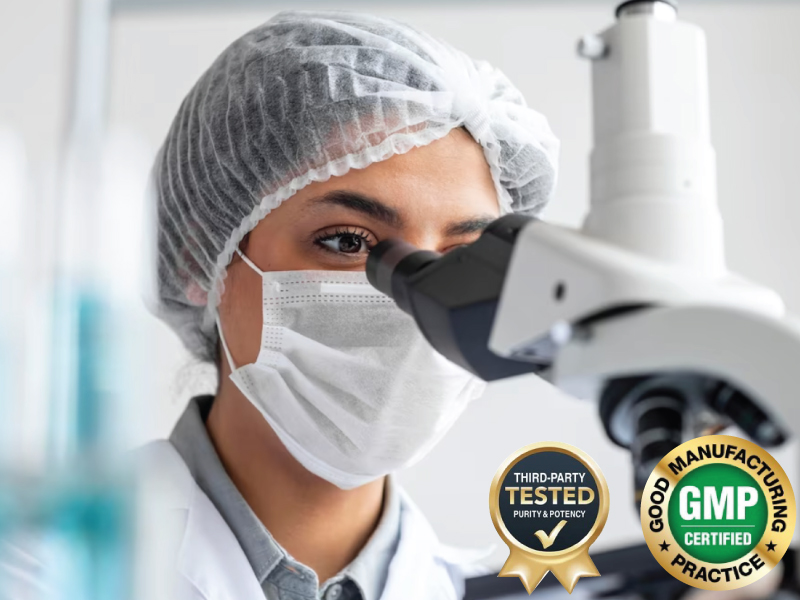
✔ Purity & Potency Testing (HPLC, FTIR, HPTLC)
We verify the identity and strength of our nopal cactus (prickly pear), which is grown exclusively on our own farms—never purchased from outside vendors, contract manufacturers, or unknown third-party sources. You always know exactly where your nopal cactus comes from.
✔ Clean, Additive-Free Ingredients
Our labels show complete transparency: no fillers, colors, flavors, silicon dioxide, magnesium stearate, cinnamon, cayenne, or any unnecessary additives. Nopal is a complete superfood on its own.
✔ Triple-Sealed Protection
Every bottle is sealed at the cap, sealed again under the cap, and includes protective cotton inside to maintain product integrity and freshness.
Natural Home Cures tests our Nopal Powder Capsules (Prickly Pear) For:
✔ Microbiology (Biolumix)
Testing for the aerobic bacterial count, yeast, mold, Salmonella, E. coli, and more.
✔ Heavy Metals & Metal Assays (ICP-MS)
Includes lead, mercury, cadmium, arsenic, and minerals such as magnesium, calcium, and more.
✔ Full Transparency
Where other companies will tell you to take their word for it, Natural Home Cures proudly shows you this information.
✔ Industry Regulations (FDA & FTC)
Natural Home Cures complies with both Food and Drug Administration (FDA) and the Federal Trade Commission (FTC) guidelines. These ensure that consumers can trust the label information and safety of our Natural Home Cures Freeze Dried Nopal Powder Capsules. All facets of supplement manufacturing, labeling, and marketing are covered by extensive regulations issued and enforced by the FDA and FTC.
Source References
Click To See The Source References